Kelp story 페이지
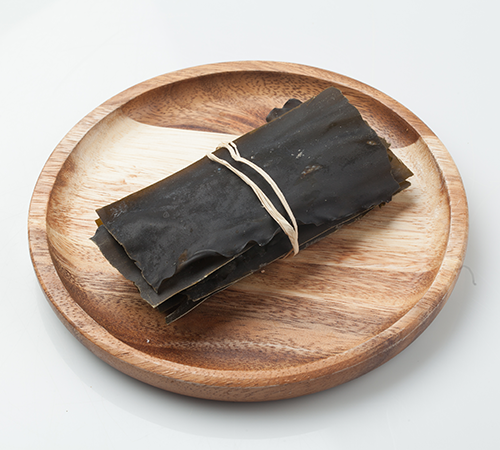
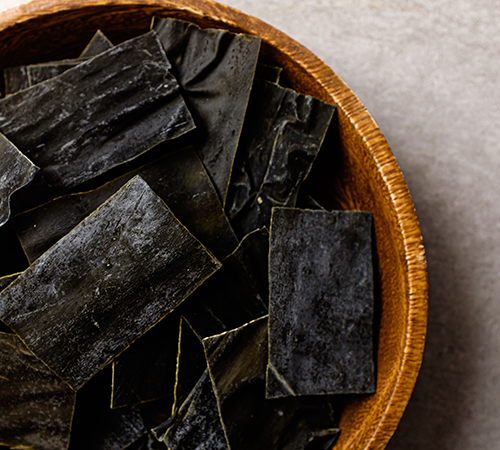
In Korea, kelp is mainly used to wrap vegetables, make broth, and is also used to make soy sauce. The kelp we are familiar with is dark brown, but this is when it is soaked in water, and when dried, it is white or gray.
Kelp has been cultivated on the Korean Peninsula since ancient times, and during the Goguryeo period, kelp was used for food/medicine, and during the Silla period, taxes were paid with kelp. In addition, Chinese literature records that good kelp and seaweed were produced in Silla and Balhae, and that they were sent to China.
During the Joseon period, kelp began to be processed/preserved in various ways, and dishes and drinks using kelp developed.
Kelp has a low calorie content of 20 kcal per 100g,
and it is rich in dietary fiber, increasing satiety, making it a highly effective food for dieting.
Additionally, the soluble dietary fiber in kelp is known to help prevent the common issue of constipation among dieters.
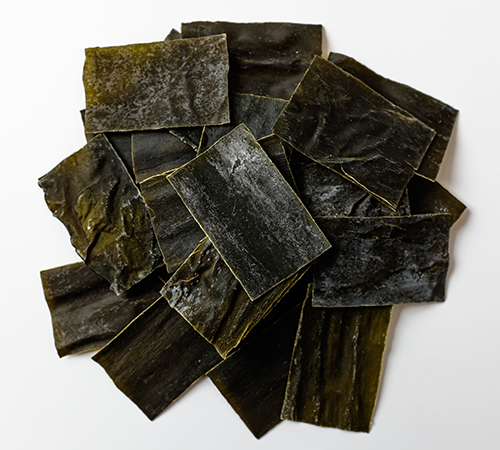
The soluble dietary fiber in kelp helps improve cholesterol levels and lower blood pressure, which can reduce the risk of cardiovascular and cerebrovascular diseases.
Additionally, potassium and a substance called laminin aid in lowering blood pressure, helping to prevent hypertension.
Rapid spikes in blood sugar levels after meals put stress on the pancreas and can lead to diabetes.
Kelp helps slow the rise in blood sugar after meals, aiding in the prevention of diabetes.
Open Food / CEO : Shin Hyuk-ho
/
Business Registration Number : 704-86-00538
TEL : 061-833-3663 /FAX : 061-833-3113
Address : 14, Clean Food Complex-gil, Donggang-myeon, Goheung-gun, Jeollanam-do Open Food
Privacy Officer : Ryu Sang-wook
/
Contact lyu1970@daum.net for more information. ADMIN